Florida Iguana & Tortoise Breeders

27" Male Black Dragon Iguana Melanoderma hatch 2023 these end up being massive
| Animal: | ID#6704 |
| Family: | OtherIguana |
| Genus: | Black Dragon |
| Availability: | Available |
| Size: | 27 inches |
Stunning male black dragon breeder.
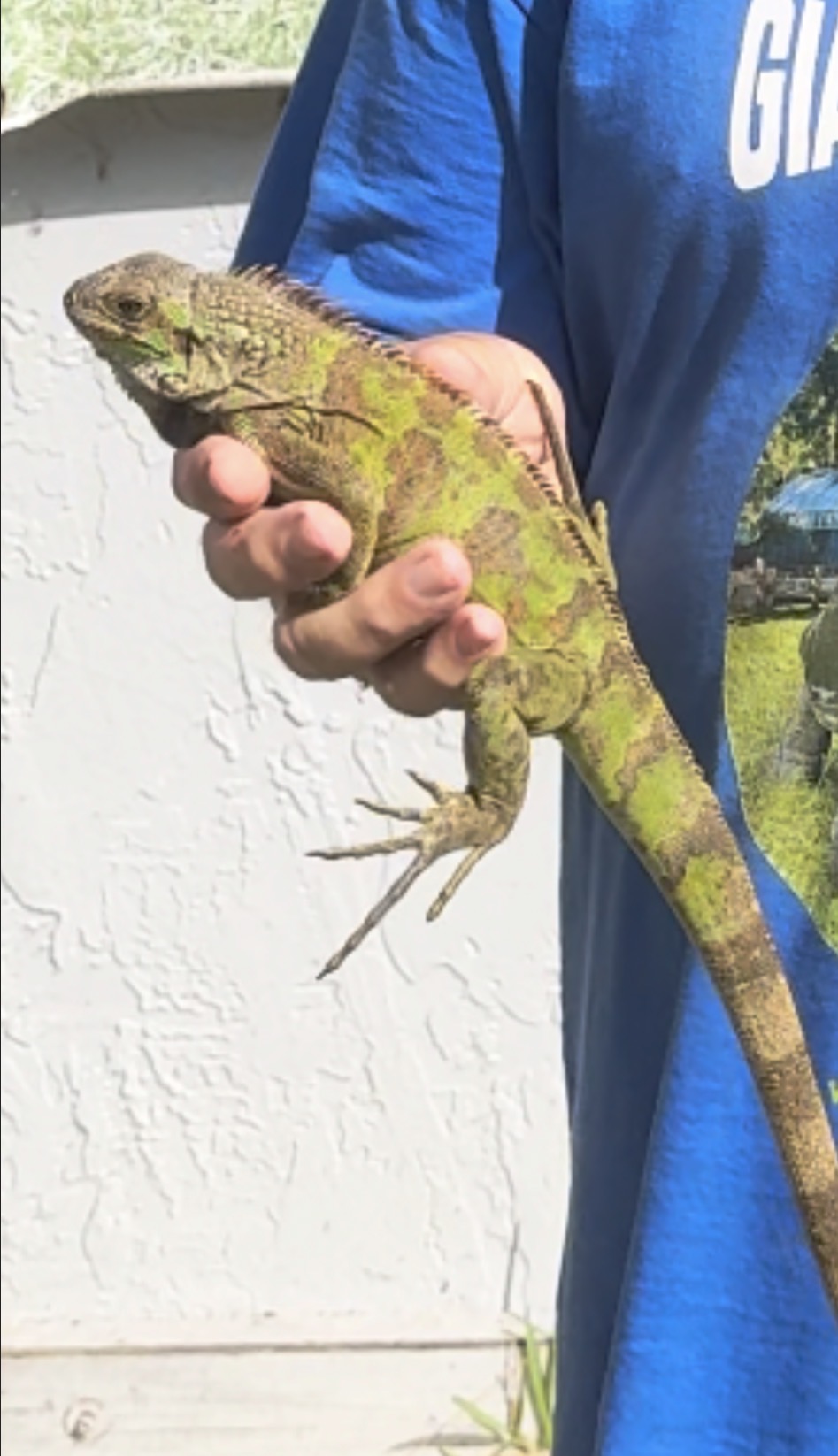
Black Dragons. A newly described. Iguana from Montserrat. They have large black bodies with long spines, a white head and pink lips. They look striking and they are incredibly rare. Here is a description .The Saban black iguana (iguana melanoderma), also known as the painted black iguana, Please note in the video I referred to him as 2060 703. You can see he's clearly marked 67O4 on his tail. The Saba Black iguana (melanoderma? iguana), also known as the painted black iguana, is a ?new classification the species went through a reclassification when scientist realized there was sufficient evidence to distinguish them from the iguana, iguana classification a group which they were initialized filled under. T?his species lives on the islands of Saba and Montserrat in the Caribbean.? this iguana produces more melanistic morph ?then the Green Iguana (iguana iguana) ?R?resulting in a dark black or brown coloration. The coloration is thought to be due to a genetic mutation that causes an overproduction of melanin. The Saba Island Black iguana is larger than the green iguana, with adults reaching up to 6 feet in length. They have a ?c?colorful dewlap, high dorsal spikes, and no horns on the snout. The black facial patch between the eye and tympanum is also a distinguishing characteristic. The Saba Black iguana is an arboreal lizard that lives in the rainforests of Saba and Montserrat. They are omnivorous, eating fruits, leaves, insects, and small animals. The lizards are preyed upon by hawks, snakes, and feral cats. The Saba Black iguana is a protected species in both Saba and Montserrat. However, the population is declining due to habitat loss, predation, and the introduction of non-native species. ?More about the reclassification: The Saba Black iguana was originally classified as a subspecies of the green iguana (Iguana iguana). However, in 2020, a study published in the journal Zoo taxa found that there was sufficient genetic and morphological evidence to distinguish the Saba Black iguana as a separate species. The study found that the Saba Black iguana has a number of unique genetic features, including a different mitochondrial DNA haplotype and a number of private microsatellite alleles. The study also found that the Saba Black iguana has a number of unique morphological features, including a larger size, a darker coloration, and a different shape of the head and dewlap. The reclassification of the Saba Black iguana is significant because it helps to protect this rare and endangered species. By recognizing the Saba Black iguana as a separate species, it is now possible to take specific measures to conserve its habitat and population. Here are some of the reasons why the Saba Black iguana was reclassified: The Saba Black iguana has a unique genetic makeup that distinguishes it from the green iguana. The Saba Black iguana has a unique morphological appearance that distinguishes it from the green iguana. The Saba Black iguana is found in a different geographic range than the green iguana.