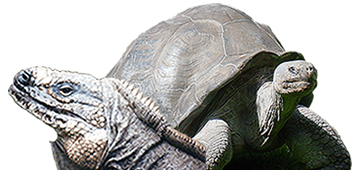
Aldabra Tortoise - {Geochelone Gigantea}

Aldabra Tortoise

Care Information

Life Span: 200 years
Size: Males: 47 Inches long and 550 lbs. on average. Females: 35 Inches long and 330 lbs. on average.
Food / Diet:
Feeding Procedures:
Habitat:

CB Aldabra Hatchlings Tortoises

I have two CB Aldabra hatchlings tortoises for sale $2,0000 each.
They are 3.5 inches long and weight 162 grams each.
They were hatched out in February
They are well started and eating everything in front of them.
They are very active and lots of fun.

Back on May 24 they were inches 2.75 inches long and weighed 78 grams
They are gaining 1.5 grams a day (on average)
SKU: CBALDABRA

Only: $2,000.00

Photos


Aldabra Tortoise Overview

Aldabra Giant Tortoise Overview

The Aldabra Giant Tortoise (Geochelone gigantea), from the islands of the Aldabra Atoll in the Seychelles, is one of the largest tortoises in the world. This species is widely referred to as Geochelone gigantea but is now placed in the genus Dipsochelys (or sometimes in the invalid genus Aldabrachelys) as Dipsochelys dussumieri.

Taxonomy and etymology
The carapace is a brown or tan color with a high domed shape. It has stocky, heavily scaled legs to support its heavy body. The neck of the Aldabra Giant Tortoise is very long, even for its great size, which helps the animal to exploit tree branches up to a meter from the ground as a food source.
Similar in size to the famous Galapagos Giant Tortoise, its carapace averages 120 centimetres (47 in) in length. The average weight of a male is around 250 kilograms (550 lb), but one male at the Fort Worth Zoological Park weighs over 360 kilograms (790 lb). Females are generally smaller than males, with average specimens measuring 90 centimetres (35 in) in length and weighing 150 kilograms (330 lb).

Range and habitat
Sahel of Sahara Desert TortosieThe main population of the Aldabra Giant Tortoise resides on the islands of the Aldabra Atoll in the Seychelles. The atoll has been protected from human influence and is home to some 152,000 giant tortoises, the world's largest population of the animal. Another isolated population of the species resides on the island of Zanzibar, and other captive populations exist in conservation parks in Mauritius and Rodrigues. The tortoises exploit many different kinds of habitat including grasslands, low scrub, mangrove swamps, and coastal dunes.

Habitat A peculiar kind of habitat has co-evolved due to the grazing pressures of the tortoises: "tortoise turf," a comingling of 21 species of grasses and herbs. Many of these distinct plants are naturally dwarfed and grow their seeds not from the tops of the plants, but closer to the ground to avoid the tortoises' close cropping jaws.
As the largest animal in its environment, the Aldabra tortoise performs a role similar to that of the elephant. Their vigorous search for food fells trees and creates pathways used by other animals.

Feeding ecology Primarily herbivores, Aldabra Tortoises will eat grasses, leaves, and woody plant stems. They occasionally indulge in small invertebrates and carrion, even eating the bodies of other dead tortoises. In captivity, Aldabra Giant Tortoises are known to enjoy fruits such as apples and bananas as well as compressed vegetable pellets.
There is little fresh water available for drinking in the tortoises' natural habitat, therefore they obtain most of their moisture from their food.
Aldabra Giant Tortose Geochelone gigantea at Bristol Zoo, EnglandThe Aldabra tortoise has two main varieties of shell. Specimens living in habitats with food available primarily on the ground have a more dome-shaped shell with front extending downward over the neck. Those living in an environment with food available higher up off the ground have a more flattened topped shell with the front raised to allow the neck to extend upward freely.

Behavior Aldabra tortoises are found both individually and in herds, which tend to gather mostly on open grasslands. They are most active in the mornings when they spend time browsing for food.
A herd of Aldabra tortoises at the Botantical Gardens, MahéThey dig underground burrows or rest in swamps to keep cool during the heat of the day.
While they are characteristically slow and cautious, they are capable of appreciable speed, especially when tempted with a treat. They are also known to attempt perilous acrobatic feats, rising precariously on their hind legs to reach low branches. They risk death by tipping onto their backs and being unable to right themselves.
They are also excellent swimmers, being naturally buoyant. This factor has allowed the spread and eventual speciation of many kinds of related tortoises across the Indian Ocean.
The tortoises are not domestic or tame, but they are remarkably indifferent to the presence of humans. They do not seem to have any fear of people; some even seek them out for attention. Some like to have their heads patted, others enjoy having their necks scratched where they meet their plastron.

Life History Large tortoises are among the longest-lived animals on the planet. Some individual Aldabra Giant Tortoises are thought to be over 200 years of age, but this is difficult to verify because they tend to outlive their human observers. Adwaita was reputedly one of four brought by British seamen from the Seychelles Islands as gifts to Robert Clive of the British East India Company in the 18th century and came to Calcutta Zoo in 1875. At its death in March 2006 at the Kolkata (formerly Calcutta) Zoo in India, Adwaita is reputed to have reached the longest ever measured life-span of 255 years (birth year 1750), although the accuracy of this is disputed due to a lack of contemporary records. Today, Esmeralda is thought to be the oldest living Giant Tortoise at 170 years old, since the death of Harriet at 176, a Galapagos giant tortoise. Esmeralda is an Aldabra Giant Tortoise.

In captivity The Aldabra tortoise is recently becoming more available in the pet trade. The price still makes them somewhat of an exclusive animal, costing between $1,000 and $20,500 depending on size as of 2006. Care for these tortoises requires a good deal of commitment. They are very powerful as adults, and can be destructive in a typical suburban setting; capable of ramming through fences and doors. Fairly expensive accommodations are necessary to contain these tortoises and keep them at a comfortable temperature throughout the year (80-95°F 27-35°C).
Due to their size and longevity, Aldabra tortoises sometimes figure as a prestige gift from the Seychelles government to foreign countries. A pair of these animals is to be presented by the island country to the 2010 World Expo in Shanghai in celebration of the 60th anniversary of the founding of the People's Republic of China. The two tortoises will be actually kept in Shanghai Zoo.

Breeding Between February and May, females lay between 9 and 25 rubbery eggs in a shallow, dry nest. Usually less than half of the eggs are fertile. Females can produce multiple clutches of eggs in a year. After incubating for about 8 months, the tiny, independent young hatch between October and December.
In captivity, oviposition dates vary. Tulsa Zoo maintains a small herd of Aldabra tortoises and they've reproduced several times since 1999. One female typically lays eggs in November and again in January, providing the weather is warm enough to go outside for laying. The zoo also incubates their eggs artificially, keeping two separate incubators at 81 degrees F and 86 degrees F. On average, the eggs kept at the latter temperature hatch in 107 days.


Terms of Service

The Legal stuff:
Federal Law requires tortoises sold as pets to be at least 4 inches. Tortoises 4 inches and over are legal Pet Shop Size these can be sold as pets (Please check your local & state laws). All tortoises less than 4" straight length are sold as per Federal guidelines 21CFR 1240.62, not sold as "pets" only sold for Scientific, Educational, Exhibition or Export purposes.

PLEASE READ:
All Sulcatas are captive raised on my farm, my farm has been raising tortoise for 25 years. All group lots of tortoise (over 10) are sold with a Vet Health Certificate (required for interstate travel). Note failure to read my terms & Conditions for any reason will not be a reason to consider them void or altered.

Live arrival & Health terms:
The high and low temperature range for the day must be above 40 and below 88 degrees (Shipping & Receiving locations). You or your agent must be present to sign for door to door shipments (First delivery attempt). Orders sent to the airport must be picked up within 4 hours of their arrival time. I am not responsible for missed deliveries or carrier delays. (Missed delivers void the live arrival & health guarantees)

30 Day Health Guarantee:
For animals bought in single lot quantities (No Health Certificate) Animals are guaranteed healthily, eating and acting normally. If you’re animal is sick or is not eating, you can return them prepaid shipping back to us and we will exchange the animal with free shipping back to you. Does not cover sudden death, the animal you send back must be live (Please see Live arrival & Health terms) your health guarantee may be void if the shipping terms were not meet. (Animals bought in Lots come with a health certificate and have been double insured healthy the 30 day health exchange does not apply). Guaranteed live arrival: Animals are guaranteed to arrive live providing our terms are met (please see Live arrival & Health terms). Animals that do not arrive a live will be replaced. No other guarantees or warrantees are implied or offered.

PAYMENT:
We except Bank wire transfer and prefer PayPal . We can send you an invoice thru PayPal or you can send PayPal money directly to sam@FloridaIguana.com. You can also pay by certified check or personal check (allow time to clear). We are happy to hold animals with a 20% non-refundable deposit.

SHIPPING:
We offer Next day UPS service from here if the weather is safe. UPS offers no insurance on livestock (your risk). Most small UPS orders are $45. Other shipping methods available: For large orders we can ship by airlines (Delta is best out of Ft Lauderdale FL) with insurance. Most small air shipments are $85. If you’re paying by PayPal, we only ship to confirmed PayPal address

Note that all door-to-door orders must have someone available to receive and sign for the package (at the first attempt of delivery) or the Health Guarantee is void. All shipping rates noted above are estimates and vary depending on location and order size. Please provide address for a shipping quote.

PHOTOS:
The photos in this ad may or may not be the actual animal (unless other wise noted). Additional photos available by request.

CONTACT:
Email is the best way to contact me: Sam@FloridaIguana.com
Florida Iguana & Tortoises Breeders
Cooper City FL
www.floridaiguana.com
sam@floridaiguana.com